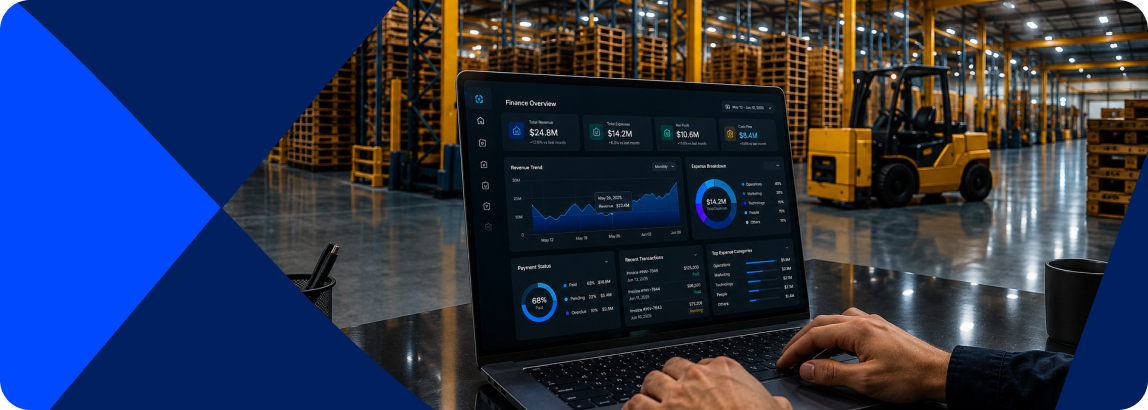
Deployment on-site
Internal data centers are used to host frameworks, offering a high level of security and control.
Deploy production-ready large language models within your own infrastructure, on-premise, in a private cloud, or through a hybrid environment, to make sure that your company’s sensitive enterprise data never leaves your controlled boundary.
Discuss Self-Hosted LLM Deployment

Self-hosted LLM deployment is the process of implementing and operating large language models (LLMs) entirely within an organization’s own infrastructure. Unlike the other SaaS-based AI platforms, this approach removes dependence on third-party environments and external data processing systems.
Models are hosted in safe, internally controlled environments rather than sending enterprise data to outside AI service providers. This enables businesses to keep total control over runtime behavior, data flows, infrastructure, and access permissions. Likewise, companies incorporate tested base models, like licensed or open-source foundation models, and set them up to operate safely inside their own ecosystems. Finding, integrating, and operationalizing models for practical business use cases is the main goal rather than creating them from the ground up.
Self-hosted LLM deployment gives businesses exact control in several areas:
All enterprise documents, hypothesized data, and prompts stay in internal systems. This further promises that private data is never disclosed to outside platforms.
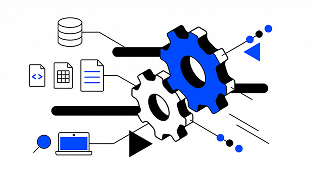
LLMs can be deeply intertwined with enterprise apps, APIs, and internal workflows. This erases the need for additional external connectors and facilitates flawless divisional automation.

Enterprise policies and role-based access control govern who can access, alter, or apply models. This ensures secure use in line with the organizational hierarchy.

Compute, storage, and networking resources are fully owned by businesses. This makes it possible for scalability in line with business requirements, cost control, and predictable performance.

Inference activity, usage patterns, and model behavior are monitored and logged for compliance.

In this approach, the focus is not on training new foundation models, but on securely deploying, configuring, and operationalizing proven base models within enterprise-controlled environments.
AI Self-hosted LLMs operate as the core reasoning layer within an Enterprise AI architecture—running inside enterprise-controlled infrastructure and governed under defined security boundaries.
On-premise, private cloud, or hybrid environments providing compute, networking, and storage.
Inference servers hosting and scaling approved base models within controlled environments.
Secure connections to enterprise applications, APIs, and data systems.
Access controls, monitoring, logging, and policy enforcement across model usage.

Internal assistants that operate securely within enterprise boundaries without exposing data externally.

Controlled conversational access to internal systems and repositories.

Centralized LLM services accessible across departments under governance controls.

A controlled reasoning layer that downstream AI systems depend on.

Context-aware outputs generated within defined enterprise policies.

When enterprise AI is integrated with various teams operations throughout the company, it adds value.
AI supports sales teams with account insights, proposal drafting, CRM updates, and follow-ups—reducing manual work and accelerating deal cycles.
Support onboarding, policy queries, internal knowledge access, and employee assistance—while protecting sensitive workforce data.
Automate operational workflows, cross-system coordination, reporting, and approvals to improve efficiency and reduce manual intervention.
Assist with financial reporting, reconciliations, document analysis, and compliance checks under strict access control and auditability.
Power support teams with faster issue resolution, knowledge access, ticket summarization, and omnichannel assistance—without exposing customer data externally.
Transform your supply chain with AI-driven demand forecasting, procurement automation, inventory optimization, and supplier intelligence. Increase efficiency, reduce costs, and improve operational performance.

Deep integration with internal apps and data sources is essential for AI systems.
Predictable infrastructure ownership is crucial for long - term AI adoption.
Peripheral data dependencies and vendor lock-in are unacceptable.
AI findings should be detectable, open to scrutiny, and understandable.
Supervision, compliance, and democratic accountability are fundamental.
Based on their operational and regulatory demands, organizations can select from a wide range of implementation strategies:

Internal data centers are used to host frameworks, offering a high level of security and control.
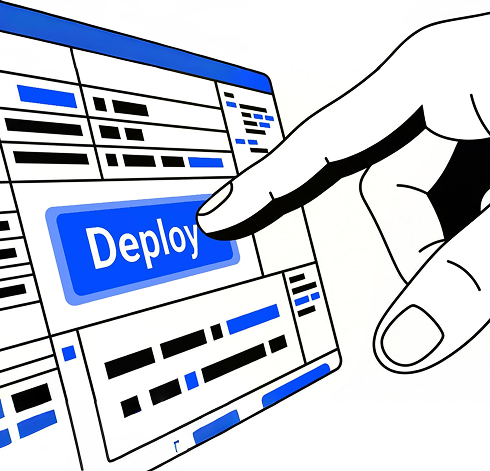
LLMs perform in highly specialised cloud environments with managed infrastructure and improved scalability.
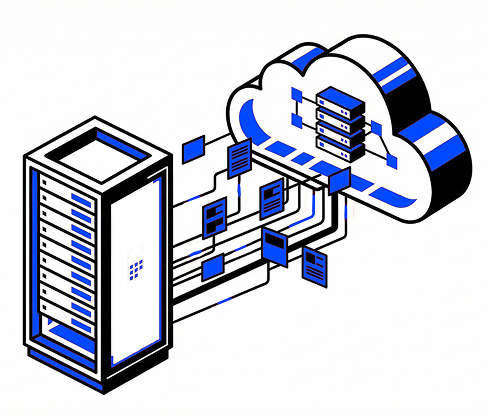
You can maintain flexibility while yielding an outcome of performance and regulatory requirements by using both on-site and cloud platforms.

Governance and Security at the Model Layer
Governance mechanisms that function directly at the model runtime and inference layer
are necessary for the deployment of LLMs within enterprise infrastructure.
Key considerations include:

Limiting access to particular individuals, groups, or systems
Making sure inference data is processed and stored under strict control
Keeping thorough records of system interactions and usage
Checking for compliance with generated outputs and prompts
Controlling runtime behavior, model versions, and parameters
Stopping abuse, illegal access, and policy infractions

To establish a precise deployment plan, we assess infrastructure capabilities, compliance needs, and integration complexity.
In order to ensure optimal performance and alignment, we identify and configure tested base models that are customized for your enterprise use cases.
We create and execute safe integrations, such as workflow automation systems, AI agents, and Retrieval-Augmented Generation (RAG) pipelines.
To ensure compliance and transparency, we established powerful frameworks for visibility, security systems, and monitoring.
To ensure seamless adoption and long-term scalability, we facilitate phased deployment across teams and business units.
Deployments are aligned with a broader Enterprise AI ecosystem.
Timelines vary based on infrastructure readiness and integration complexity, but structured deployments can move from assessment to controlled production rollout within weeks.

Whether you need a single AI agent or a full enterprise AI platform, Iconflux can help.
Tell Us About Your Project
We will get back to you within 24 hours.