AI for Customer Support That Delivers Faster, Smarter Service
Iconflux AI in customer support improves response times, automates repetitive queries, and enhances customer experience. This AI department works within your existing helpdesk systems, workflows, and communication channels.
Schedule an AI Customer Support Consultation

What Does AI for Customer Support Mean
Maintaining quick, accurate, and reliable support gets harder as customer expectations rise.
AI  for customer service enables companies to automate tedious support tasks, enhance
response quality, and provide assistance across channels more  quickly.
AI for manufacturing systems can deliver precise and context-aware responses in real time by analyzing

Customer interactions
Support history
Enterprise knowledge
AI-powered customer service handles routine and operational support  workflows while
human agents continue to handle complex or sensitive conversations. This helps teams work more
productively and  scale support operations without adding to their workload.
How Can AI Be Applied to Customer Support
AI for customer service can be integrated into manufacturing and other enterprise systems without replacing current workflows. It can automate support tasks, enhance communication, and produce quicker customer experiences.
Customer Self-Service AI Assistant

Use Case :
Frequently asked questions about product details, order status, service requests, return policies, warranty conditions, troubleshooting procedures, and support procedures can be easily answered for customers, dealers, distributors, and service partners.
KRA/KPI Impact :
The AI for Customer Support increases self-service resolution rates, minimises the volume of support tickets, speeds up first responses, and improves overall effectiveness.
Generative AI Action :
The AI in Enterprise can generate multilingual assistance materials, product support summaries, service request responses, guided troubleshooting steps, and instant customer responses.
Voice AI for Customer Support Calls
Use Case :
Inbound customer support calls can be handled by voice AI by providing answers to frequently asked questions, recording service requests, assisting clients with simple troubleshooting, and directing complicated problems to the appropriate support teams.
KRA/KPI Impact :
Decreases call handling time, boosts support availability, enhances call response effectiveness, and assists teams in handling increased customer query volumes without adding to the manual workload.
Generative AI Action :
Call summaries, voice-to-text service logs, automated call routing notes, transcripts of customer queries, and drafts of follow-up responses can all be produced by AI.
AI-Based Customer Sentiment Analysis
Use Case :
To understand customer sentiment, frustration signals, escalation risks, and recurrent dissatisfaction patterns, the AI for Customer support can examine customer emails, support tickets, chat conversations, reviews, and call transcripts.
KRA/KPI Impact :
The Enterprise AI can enhance customer satisfaction tracking, ensure escalation management, encourage proactive service development, and minimize churn risk and customer discontent.
Generative AI Action :
It can generate sentiment summaries, escalation alerts, reports on dissatisfaction trends, and customer emotion insights for support and leadership teams.
AI-Based Warranty Claim Management
Use Case :
Using the appropriate approval workflow, Enterprise AI for customer support can expedite warranty claims management by confirming warranty details, reviewing claim documents, verifying the product, and directing legitimate claims.
KRA/KPI Impact :
Warranty processing gets fast-tracked, manual labor is minimized, claim accuracy increases, and customer satisfaction in post-purchase support interactions increases.
Generative AI Action :
It can produce reports on exception handling, document-missing alerts, warranty claim summaries, approval recommendations, and claim status updates.
AI Smart Complaint Classification
Use Case :
With the integration of AI, support teams can swiftly direct complaints to the appropriate department, such as service, technical support, logistics, warranty, or escalation management.
KRA/KPI Impact :
It can enhance the speed at which complaints are resolved, lower the effort required to triage tickets, boost the effectiveness of the support workflow, and ensure that important issues are given priority more quickly.
Generative AI Action :
For service teams, AI can produce complaint summaries, priority flags, category labels, routing recommendations, and escalation recommendations.
AI Loyalty & Customer Retention
Use Case :
By identifying customers who are at risk of leaving due to complaints, delayed service, recurring product issues, declining engagement, and negative feedback patterns, artificial intelligence (AI) in enterprise can help retain and assist customers.
KRA/KPI Impact :
Long-term customer relationship management, reducing the risk of customer attrition, promoting proactive customer interaction, and boosting customer retention.
Generative AI Action :
By producing retention risk alerts, customer summaries, follow-up recommendations, loyalty outreach drafts, and leaving-risk reports, it helps account and customer service teams.
AI Review & Feedback Intelligence
Use Case :
Enterprise AI analyzes customer reviews, feedback forms, dealer remarks, survey responses, and service feedback to address service problems, product complaints, satisfaction trends, and areas for improvement.
KRA/KPI Impact :
It increases visibility into the customer experience, encourages service quality improvements, aids in identifying persistent customer problems, and strengthens brand reputation monitoring.
Generative AI Action :
It can produce voice-of-customer insights, feedback trend dashboards, recurring issue reports, review summaries, and suggestions for service enhancements.
What are the Applications of AI in Customer Support?
AI in customer service integrates with various support workflows to boost
customer satisfaction, automate tasks, and improve communication.
In practice, AI fits into the following areas:

AI Support Chatbot
Let’s understand it with an example: when a customer inquires about an order delay, the AI chatbot immediately retrieves relevant data from internal systems to provide an accurate response without human intervention.
To provide intelligent and safe customer service within their own infrastructure, Self-hosted LLM-powered AI support chatbots enable companies. These systems produce accurate responses while completely protecting sensitive data by utilizing enterprise knowledge, support documentation, and customer context.
AI Automated Ticket Resolution
The most time-consuming, repetitive, and demanding job is to satisfy customers. For that purpose, AI customer service in an enterprise recognizes password reset requests, responds, and closes the ticket without human intervention. It minimizes the human effort required to respond to all queries individually, enhances operational effectiveness, and helps teams avoid delays.
Knowledge Base Automation
When support tickets ask the same questions, AI automatically creates and updates articles for future self-service support. AI customer service can automatically create, organize, update, and retrieve data from enterprise knowledge bases. Thanks to this, customers and support staff will always have access to correct and up-to-date information.
Voice AI Support Agent
Voice AI support agents enable companies to use natural conversations to automate voice-based customer interactions. When necessary, these systems can escalate calls, assist clients, and respond to questions.
When a customer calls support to inquire about the status of their delivery, the Voice AI agent uses real-time system data to provide an immediate response.
Customer Sentiment Tracking
If a customer becomes frustrated during a support interaction, the AI in customer support will try to respond sensitively, flag the conversation, and forward it to a senior support agent.
It can read the emotions such as frustration, urgency, or dissatisfaction by analyzing customer conversations, messages, and interactions. After that, teams can better handle customers and prioritize important cases.
Workflow Automation
AI can automatically initiate escalations, approvals, notifications, and task coordination by integrating with workflow and operational automation systems.
As a result, there are fewer delays and better departmental and customer support team coordination.
What Are the Benefits of AI in Customer Support
To manage customer interactions and support operations, AI-powered customer service for manufacturing and other departments plays a crucial role.
Provides Faster Response Times
By quickly responding to customer questions, Iconflux AI customer service reduces wait times and increases customer satisfaction.
Will Reduced Manual Work
Tasks such as ticket routing, categorization, and follow-ups can be automated through AI.
Assist in Better Customer Experience
For quicker, more precise, and more individualized support, it provides better customer interaction.
Available for 24/7 Support
Our AI customer support system is available 24/7. So it will respond to customer queries after business hours.
Improve Support Team Productivity
Your team can focus on complex high-value customer issues with our AI customer service.
Scalability in Customer Support Operations
Businesses can manage increased support volumes without significantly raising operational costs with Enterprise AI system integration.
How Enterprise AI works in Customer Support

Integration with Helpdesk & CRM Systems
For current support workflows, communication tools, CRM systems, and helpdesk platforms, AI is integrated with the system.
Access to Enterprise Knowledge
AI uses internal documentation, FAQs, support history, and operational data to deliver precise and context-aware support.
Workflow Automation & Execution
It is possible to automate tasks across systems, including ticket updates, escalations, follow-ups, and support coordination.
Data Grounding for Accuracy
AI responds with enterprise-approved knowledge to increase consistency and reliability.
Continuous Monitoring & Improvement
AI systems continuously learn from interactions and operational data to enhance quality over time.
AI Services That Transform Your Customer Support
Deliver faster, smarter customer service with AI that automates support, resolves queries instantly, and provides agents with real-time assistance. Improve response times, increase customer satisfaction, and deliver consistent support across every touchpoint.
AI Agents
Build intelligent AI agents that automate financial inquiries, invoice approvals, reporting, compliance checks, and finance team assistance.

RAG Solutions
Enable finance teams to instantly search financial policies, ERP records, invoices, audit documents, and compliance knowledge using AI-powered retrieval.

AI Automation & Intelligent Workflows
Automate invoice processing, expense approvals, financial reporting, reconciliations, and repetitive finance workflows with intelligent AI.

Self-Hosted LLM
Deploy secure AI that protects sensitive financial records, accounting data, customer transactions, and enterprise financial information while maintaining complete control over your AI infrastructure.

Data Engineering
Connect AI with ERP systems, accounting software, payroll platforms, CRM, and financial databases to deliver accurate, real-time financial insights.

MLOps & AI Infrastructure
Deploy, monitor, and scale AI-powered finance solutions with enterprise-grade infrastructure, governance, security, and continuous optimization.


Why Iconflux
At Iconflux, the main goal is building enterprise AI customer support systems that are safe, scalable, and compatible with business processes.
Built Around Existing Support Systems

Your present help desk, CRM, and communication platforms are all easily integrated with the solutions.
Grounded in Enterprise Knowledge
To produce precise answers, AI systems utilize internal documentation and approved support data from your business.
Focused on Practical Support Automation
Real support issues like ticket resolution, response automation, and workflow efficiency continue to be the main focus.
Designed for Enterprise Scale
Without sacrificing performance, solutions are designed to accommodate expanding customer interactions and operational demands.
Secure and Governed by Design
Security, access controls, compliance, and operational governance are built into all solutions from the start.
Built Around Existing Support Systems
Your present help desk, CRM, and communication platforms are all easily integrated with the solutions.
Grounded in Enterprise Knowledge
To produce precise answers, AI systems utilize internal documentation and approved support data from your business.
Focused on Practical Support Automation
Real support issues like ticket resolution, response automation, and workflow efficiency continue to be the main focus.
Designed for Enterprise Scale
Without sacrificing performance, solutions are designed to accommodate expanding customer interactions and operational demands.
Secure and Governed by Design
Security, access controls, compliance, and operational governance are built into all solutions from the start.
Our Blogs




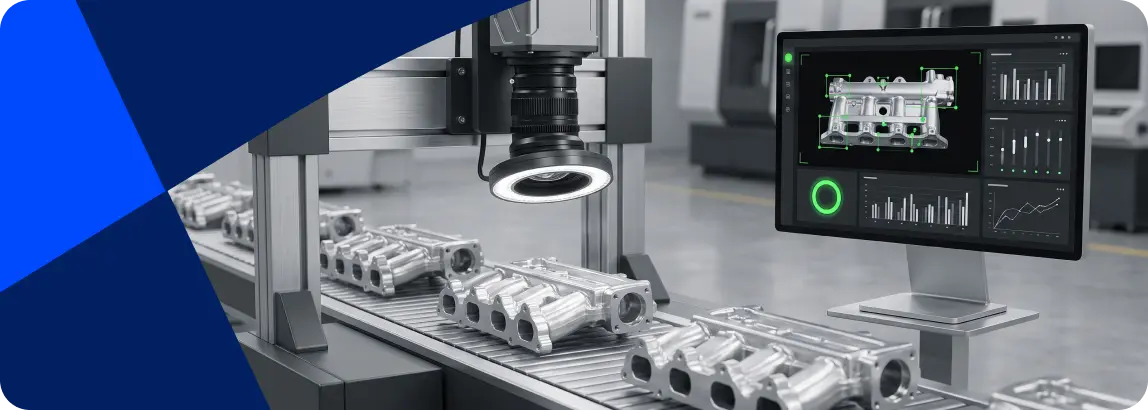
Customer Support, Powered by AI
Every AI in manufacturing solution integrates operational governance, compliance, security, and access controls from the start.
Frequently Asked Questions
- Supplier inquiries
- Order tracking
- Warranty support
- Product information
- Service inquiries


Tell Us About Your Project
We will get back to you within 24 hours.