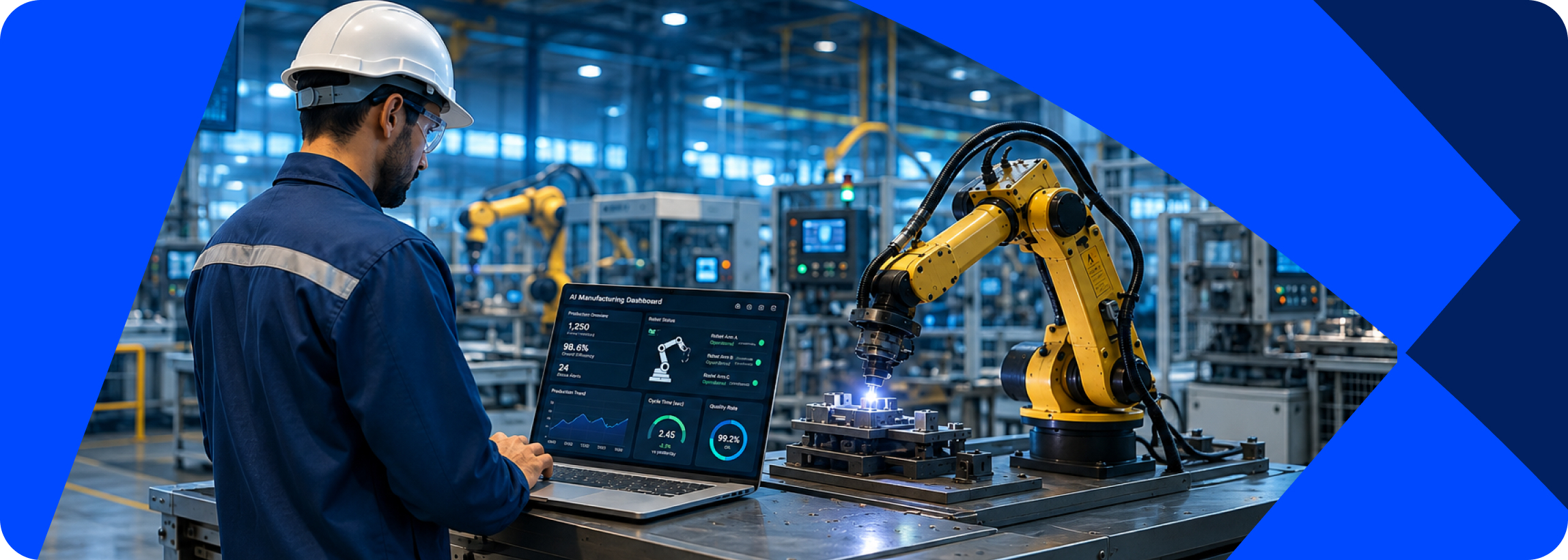

Before going to AI in Procurement, let us understand the process of Procurement. It is the formal process of any manufacturing department that is used to find, acquire, and manage the goods, services, or raw materials before using them. In simple words, it directly affects manufacturing costs, production continuity, inventory levels, and supplier performance.
Why Procurement is Becoming an AI Priority?
As technology is advancing and the way things are managed is getting automated. AI in Procurement is a shift from reactive purchasing to predictive and data-driven procurement. For Tier-2 manufacturers, procurement teams often work with large volumes of supplier data, purchase orders, raw material prices, inventory information, and production requirements. There are chances of delays and inefficiencies if these decisions depend heavily on spreadsheets and disconnected systems. That is why Iconflux’s Enterprise AIhas become a priority in Procurement to help teams make better decisions before a problem reaches production.
Why Traditional Procurement Processes Are No Longer Enough
A procurement team knows what materials were purchased last month. But it is also essential to know what will be required next month, which supplier provides the lowest risk, and when the next order needs to be placed. This process requires deeper analysis of multiple data sources. With Enterprise AI in procurement, the team will get supplier comparisons that were needed to do manually.
The traditional process used spreadsheet-based procurement planning, which can cause delayed purchase approvals and limited supplier visibility. The team faces problems like unexpected raw material price changes and excess or in sufficient inventory. AI in inventory management is solving these problems by addressing issues like difficulty in predicting material requirements and disconnected procurement and production data. Now everything is available in Enterprise AI, which can provide you with systematic data and solutions.
What Is AI in Procurement?
It is an artificial intelligence system that analyzes purchasing, supplier, inventory, pricing, and operational data to support or automate procurement decisions. AI can identify patterns, predict potential risks, recommend actions, and continuously improve decisions based on historical and real-time data.
Let us understand it with an example,
In traditional automation, if inventory falls below 500 units, the team creates the purchase request. Sometimes, things don't go into detail to make the purchase.
Now, in AI-powered procurement, the system predicts when additional material will be required and recommends the appropriate purchasing action based on demand, production schedules, supplier lead time, historical consumption, and current inventory.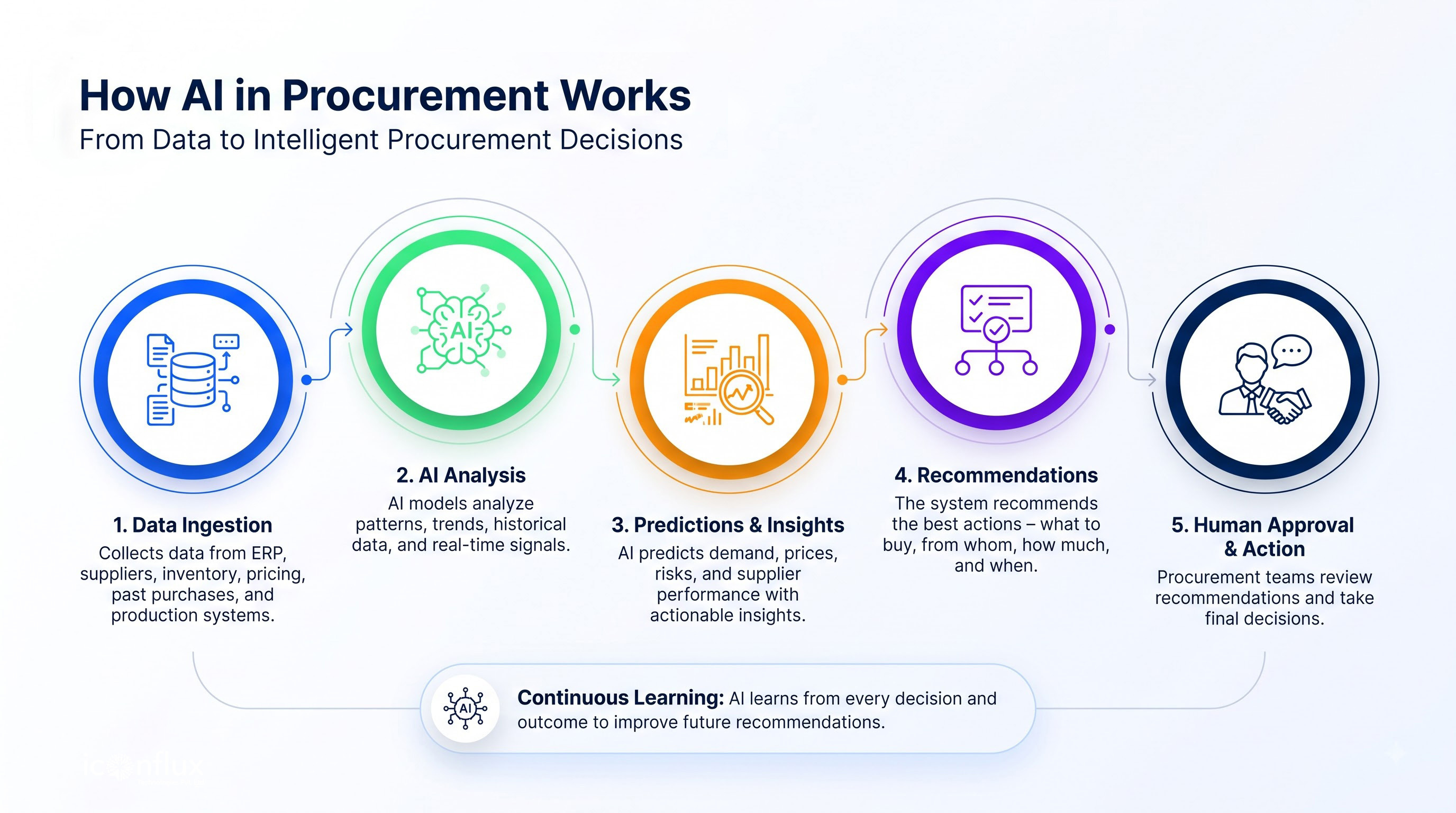
How AI for Procurement Is Transforming Manufacturing
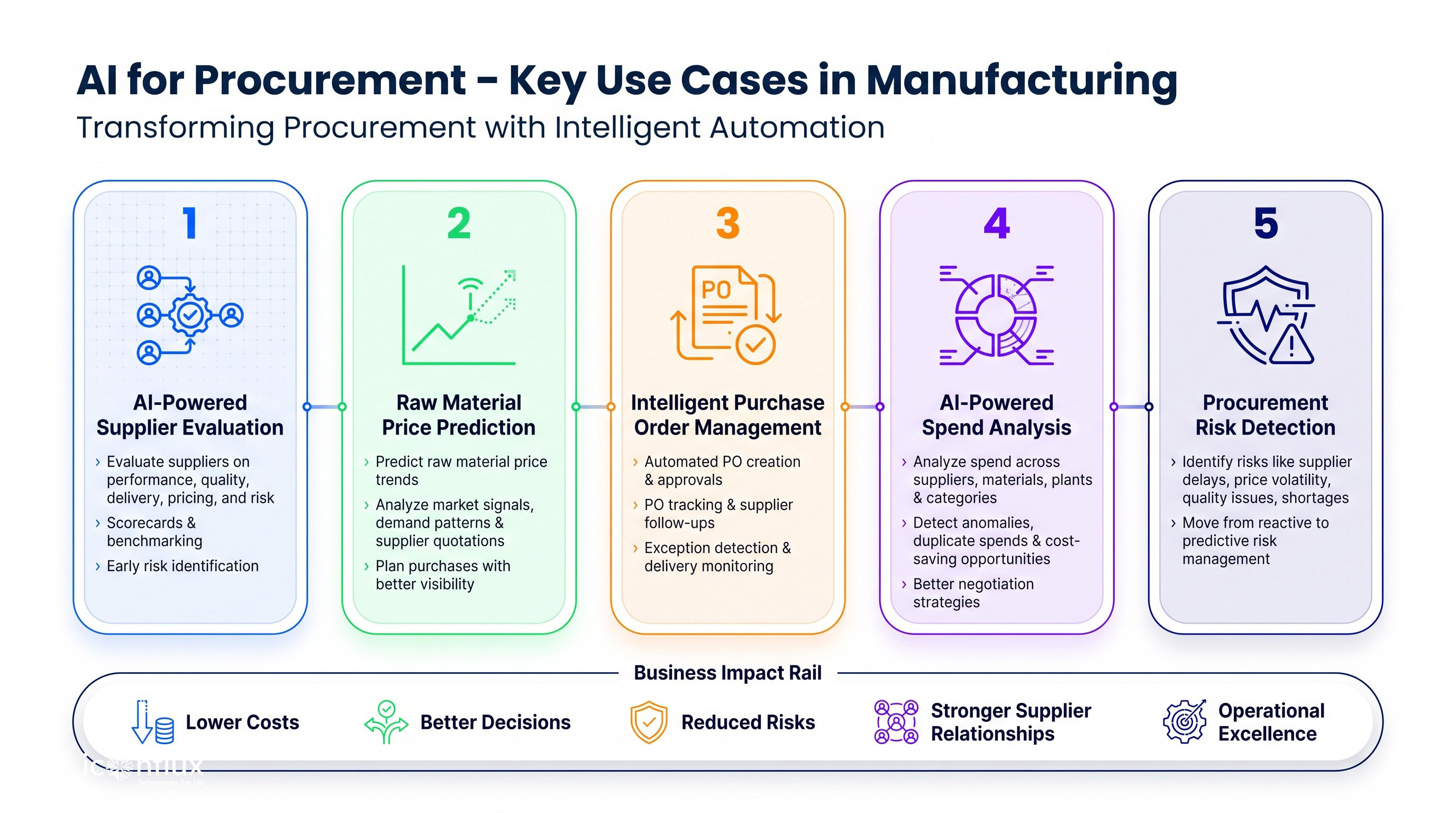
● AI-Powered Supplier Evaluation
Instead of evaluating suppliers manually, procurement teams can gain data-driven insights into supplier performance and identify potential risks earlier. Enterprise AI can analyse supplier delivery history to assess performance, product quality to ensure it meets manufacturing standards, pricing, lead times, rejection rates, payment terms, and supplier performance.
● Raw Material Price Prediction
The most essential aspect of manufacturing is to understand the raw material pricing as it can directly impact the manufacturing margins. With the help of AI, tier-2 manufacturers can access historical purchasing data to analyze market trends, demand patterns, supplier quotations, and other relevant signals to support better purchasing decisions. It is helping procurement teams to move from reacting to price changes toward planning purchases with great visibility.
● Intelligent Purchase Order Management
AI workflow automation can assist with purchase order creation, approval routing, PO tracking, Supplier follow-ups, exception detection, and delivery monitoring. It automates the whole process of management to make life easier for the team to make final decisions.
● AI-Powered Spend Analysis
AI in manufacturing can identify unusual spending patterns, duplicate purchases, supplier concentration, and potential cost-saving opportunities. It can analyze procurement spending across suppliers, materials, plants, categories, departments, and purchase volumes.
● Procurement Risk Detection
To ensure a smooth supply chain and manufacturing, procurement risk detection is a must. AI can identify potential risks such as supplier delays, price volatility, quality issues, single-supplier dependency, material shortages, and changing lead times. This moves procurement from reactive risk management to predictive risk management.
AI in Supply Chain: Connecting Procurement with the Bigger Picture
A delayed supply can affect inventory, production schedules, delivery commitments, and customer fulfilment. This entire supply chain depends on procurement decisions. The real value comes when AI connects procurement with the wider supply chain instead of treating purchasing as an isolated function. AI in supply chain can connect procurement information with demand forecasting, supplier performance, inventory, logistics, production planning, and order fulfilment.
AI in Inventory Management: Knowing What to Buy and When
When procurement AI has visibility into inventory and production needs, it becomes much more beneficial. It can assist with:
1. Demand Forecasting
Based on past and present data,AI for manufacturers can forecast future material requirements. It facilitates production management without wasting raw materials.
2. Intelligent Reordering
WithAI automation, inventory is managed through recommendations on when and how much material is needed.
3. Excess Inventory Detection
AI keeps track of material used and identifies how much material remains unused or moves slowly.
4. Shortage Prediction
The way AI can identify unused material, it can also identify potential material shortages before it affects production.
5. Inventory Optimization
It is the whole process in which inventory is managed by balancing material inventory with working-capital requirements.
The Role of AI in Operations Management
Once the procurement process is done, the next part is production. Procurement is not only a finance or purchasing function; having issues in it can affect the whole production process. That is where AI in Operations Management connects procurement to production for a quick and smooth manufacturing process. It can help operations teams to understand:
● Which materials may become bottlenecks?
● Which suppliers could affect production?
● Whether inventory levels support upcoming schedules
● Which purchase orders require immediate attention
● Where supply disruptions could affect production
Why Strong Data Foundations Matter for AI in Procurement
No matter how much AI you implement in your manufacturing department, it cannot be able to make reliable procurement recommendations if data is fragmented. The data needs to be available in a systematic way from each department for AI to make sense of it. Manufacturers may have procurement information across ERP, Inventory management systems, MES, supplies portals, finance systems, production planning systems, and spreadsheets.
It can be managed by AI data engineering, which can help collect, clean, transform, integrate, and govern this information so AI applications can use it effectively. Then comes the Enterprise data platform, which connects procurement, inventory, production, supplier, and financial information.
Moving From Procurement Automation to Intelligent Procurement
From Procurement Automation to Agentic Procurement
| Aspect | Traditional Procurement Automation | Traditional Procurement Automation | Agentic Procurement |
| How it works | Follows predefined rules and triggers actions | Analyzes data and provides recommendations | Understands objectives, plans tasks, and takes actions |
| Decision-making | Rule-based | Data-driven recommendations | Goal-driven and context-aware |
| Data usage | Uses predefined inputs | Analyzes multiple data sources | Retrieves and evaluates information across connected systems |
| Supplier Management | Sends predefined alerts or updates | Compares supplier performance and recommends options | Evaluates suppliers and initiates defined procurement workflows |
| Inventory | Triggers reorder at fixed thresholds | Predicts demand and recommends reorder quantities | Identifies potential shortages and coordinates procurement actions |
| Workflow | Executes individual predefined tasks | Supports decision-making within workflows | Coordinates multiple tasks across systems |
| Human Role | Required for most decisions | Reviews AI recommendations | Oversees AI actions and handles exceptions |
| Example | Creates a purchase request when stock falls below a set level | Predicts material requirements based on demand and inventory | Detects a potential shortage, checks suppliers, evaluates lead times, prepares the purchase recommendation, and routes it for approval |
What Tier-2 Manufacturers Should Do Next
Large manufacturers have already started using AI across procurement, supply chain, maintenance, quality, and operations. That is why they can manage large production in a limited time period. To grow as fast as Tier-1 industries, Tier-2 manufacturers must start implementing Enterprise AI in their systems. It is not necessary to transform every process at once, but implementing it by finding key areas of improvement can make it work significantly better than earlier.
They can start with high-impact procurement use cases:
● Supplier intelligence
● Raw material forecasting
● Inventory optimization
● Purchase workflow automation
● Procurement risk monitoring
Tier 2 manufacturers can also have a competitive advantage by building the data, integration, and workflow foundation. It allows AI to become part of everyday procurement decisions.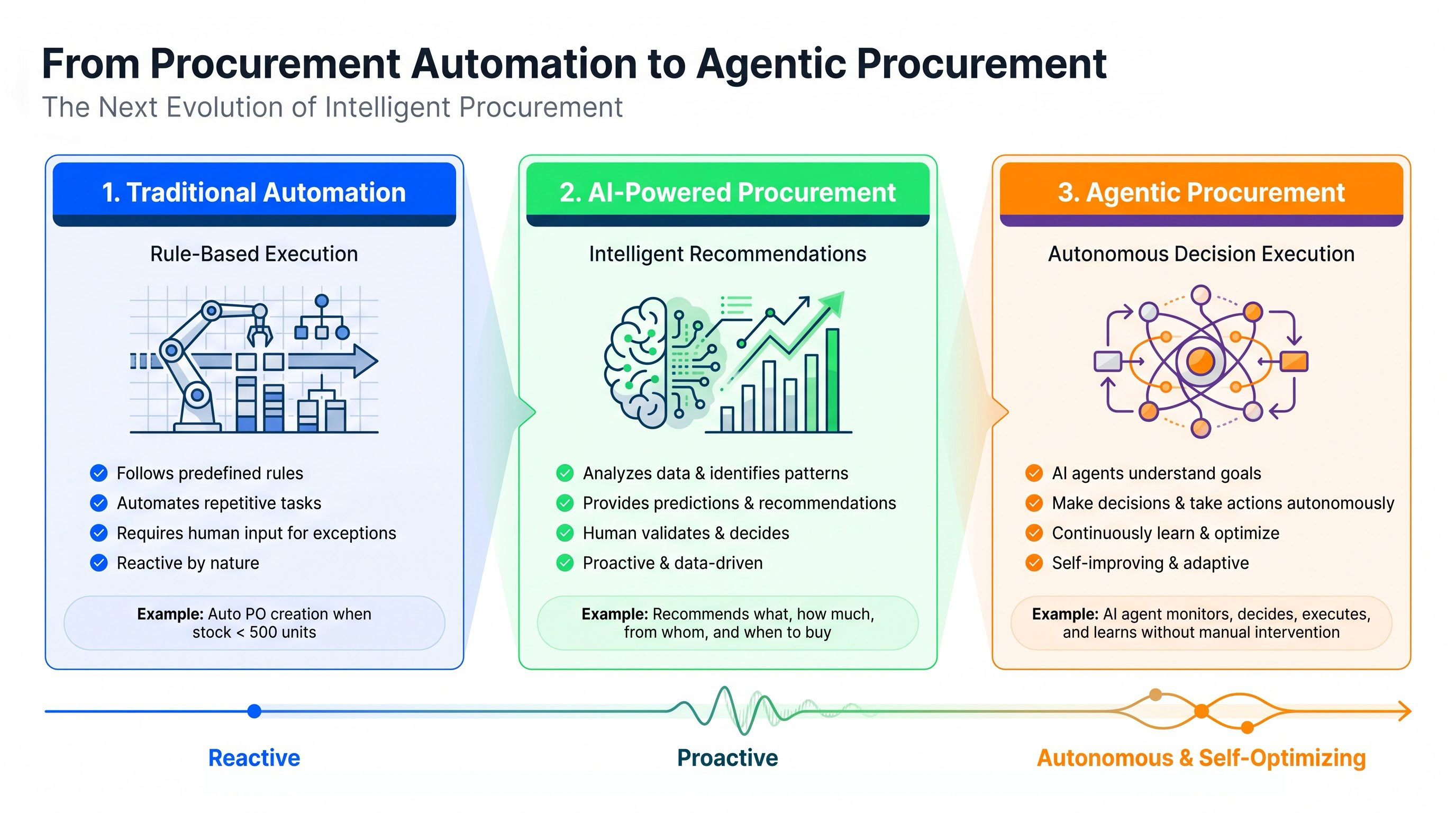
How to build an AI-Ready Procurement Foundation
Step 1: Identify High-Value Procurement Problems
It is important to step back to find measurable business challenges.
Step 2: Connect Procurement Data
There is no meaning to AI without connecting all the required data. That is why, bring ERP, inventory, supplier, and production data together.
Step 3: Improve Data Quality
It is important to clean duplicate, outdated, and inconsistent records to make data collection work smoothly.
Step 4: Select the Right AI Use Cases
Find the area where AI can produce measurable impact. It will help the system to understand how much more integration can be done.
Step 5: Integrate AI With Existing Workflows
Connect AI with ERP, procurement systems, approval workflows, and dashboards.
Step 6: Measure Business Impact
Track metrics such as procurement cycle time, material shortage rate, supplier performance, Inventory carrying cost, purchase price variance, and manual efforts.
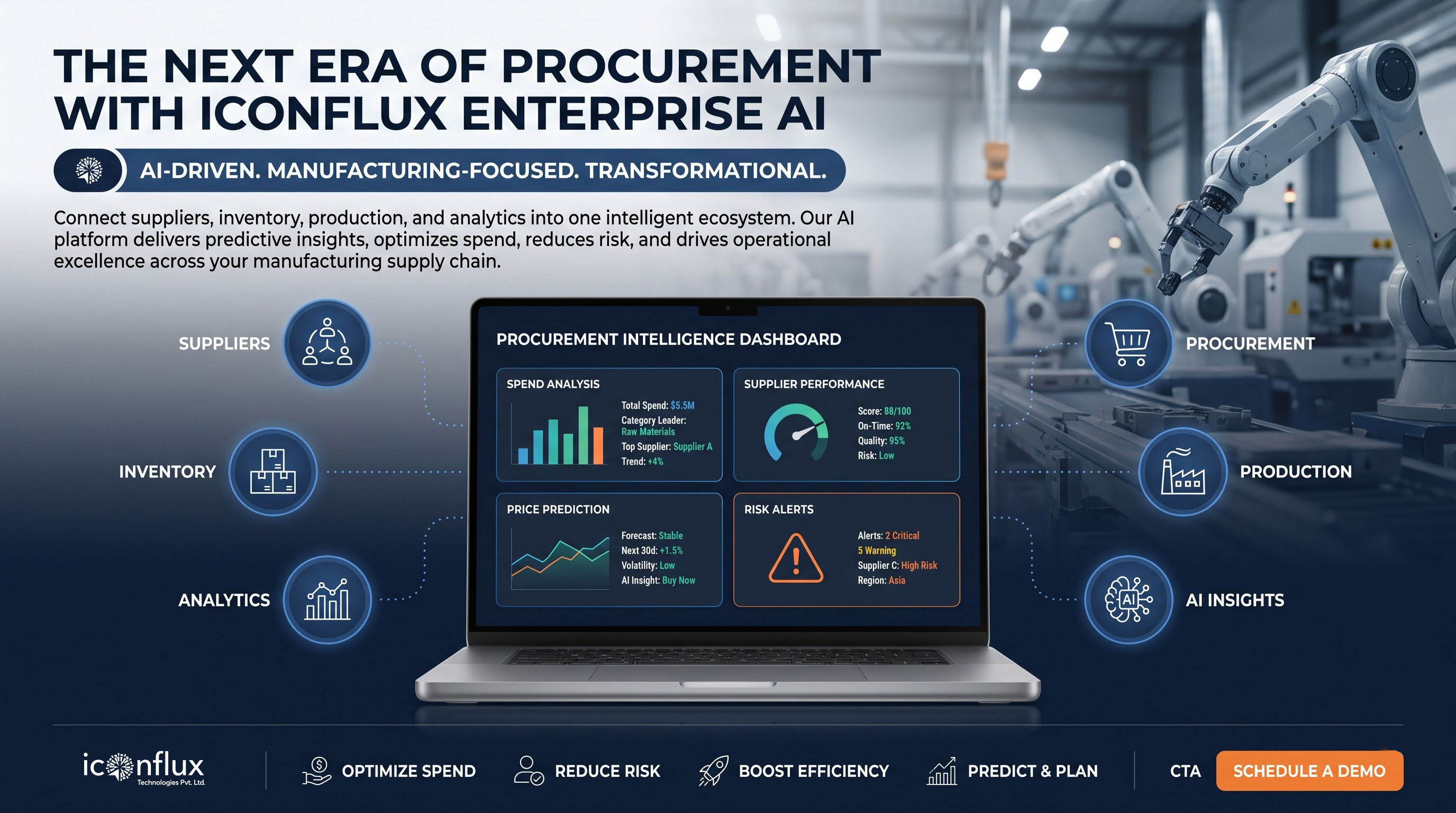
The Next Era of Procurement with Iconflux
The future of Procurement will not be defined by how quickly companies automate purchasing, but by how intelligently they can use their data to predict demand, evaluate suppliers, manage inventory, and make better decisions.
By combining AI data engineering, workflow automation, AI agents, enterprise integrations, and other AI capabilities, Iconflux helps manufacturers build AI-powered procurement and operational systems around their existing business infrastructure.


