AI-Powered Operations Management Solutions
Iconflux Enterprise AI works within your existing systems and processes to improve supply chain visibility, automate repetitive tasks, optimize inventory planning, and streamline enterprise operations.
Talk to Our AI Operations Experts
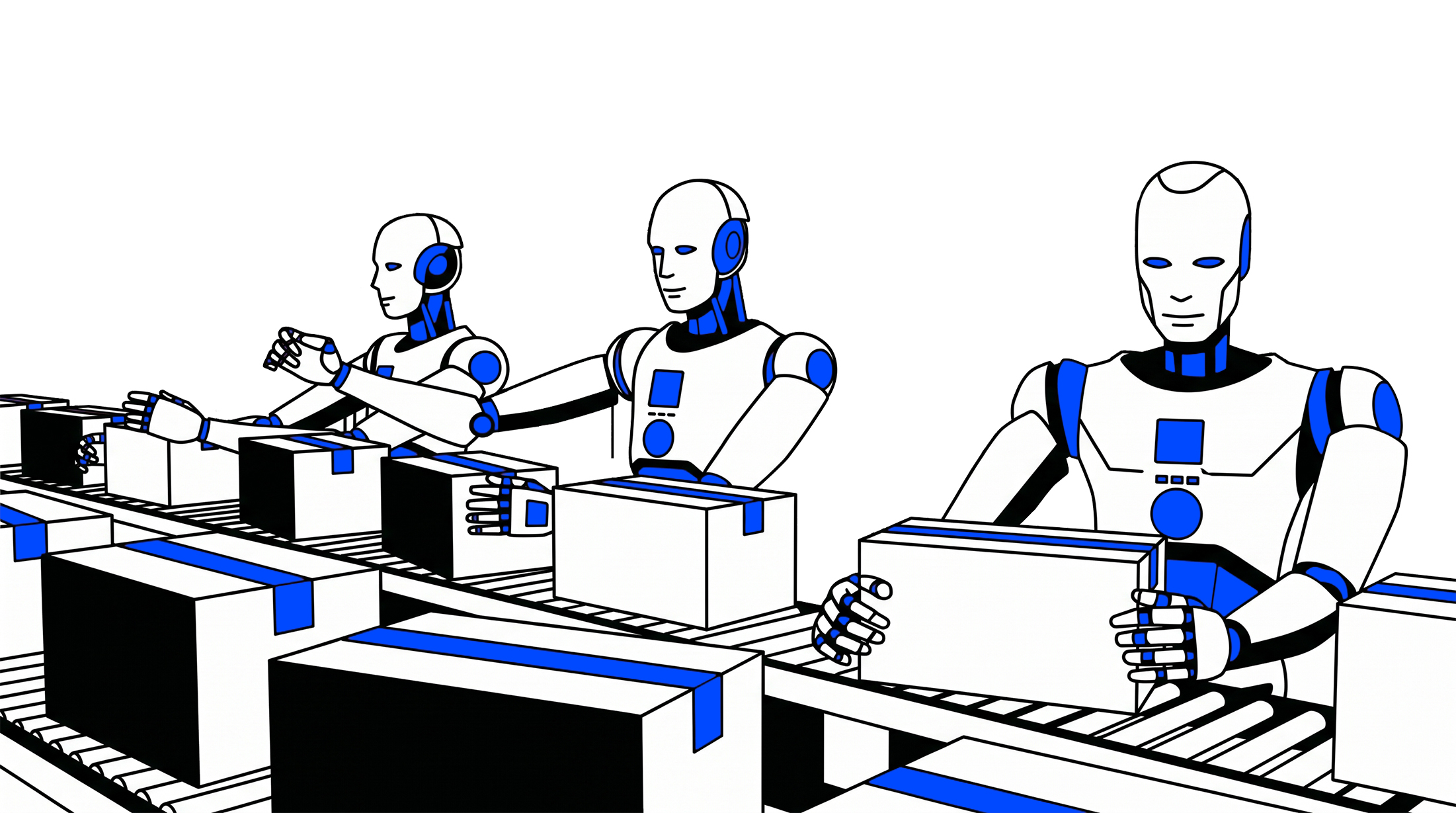
What is AI for Operations?
To handle production, inventory, procurement, logistics, and daily business operations,
modern enterprise operations  depend on a variety of systems, teams, vendors, and workflows.
It gets harder to maintain coordination, efficiency, and  visibility as operational complexity rises.
 Using real-time enterprise data, artificial intelligence (AI) for operations assists companies in

Automating repetitive tasks
Enhancing decision-making
Streamlining supply chain operations
Decreasing operational inefficiencies
AI supply chain management  systems are able to automate departmental and system-wide
coordination, forecast disruptions, optimize inventory, and analyze operational patterns.
AI for manufacturing  or other departments manages repetitive tasks, data-intensive analysis,
and workflow coordination, enabling businesses to function more quickly, precisely, and extensively
while maintaining human leadership in operational and strategic  decision-making.
How Can AI Be Applied in Operations?
AI enhances productivity, coordination, forecasting, and process automation by integrating with various operational systems.
In practice, AI fits into the following areas:
AI-Powered Plant Productivity Optimization

Use Case :
AI continuously analyzes production data, machine performance, labor utilization, and operational workflows to identify productivity bottlenecks and areas for improvement. This helps manufacturers boost output while maintaining operational efficiency and quality.
KRA/KPI Impact :
Reduces production losses while increasing plant utilization, production throughput, overall equipment effectiveness (OEE), and operational efficiency.
Generative AI Action :
Plant managers can receive productivity reports, performance gaps, optimization action recommendations, and operational improvement insights from AI Supply Chain Management.
AI-Based Shift Management Optimization
Use Case :
To maximize shift distribution and workforce planning, AI assesses workforce availability, production schedules, past shift performance, attendance trends, and operational needs. This guarantees that the appropriate resources are accessible when needed.
KRA/KPI Impact :
Enhances labor efficiency, production continuity, attendance management, shift productivity, and workforce utilization.
Generative AI Action :
Shift schedules, workforce allocation strategies, and real-time staffing recommendations based on operational demand can all be produced by generative AI.
AI-Based Root Cause Analysis
Use Case :
To find the underlying causes of persistent problems and production disruptions, AI examines production data, machine logs, quality records, maintenance history, and operational events. This enables faster problem resolution and continuous process improvement.
KRA/KPI Impact :
Minimizes recurrent operational issues, speeds up issue resolution, decreases downtime, and increases process reliability.
Generative AI Action :
Root cause summaries, recommendations for corrective action, and comprehensive incident analysis reports can all be produced by generative AI.
AI-Based Shift Performance Intelligence
Use Case :
To find performance trends and operational variances, AI tracks shift-level performance across production output, quality metrics, machine utilization, downtime, and worker productivity. This gives management more insight into how the plant operates.
KRA/KPI Impact :
Enhances worker performance, operational consistency, production target attainment, and shift productivity.
Generative AI Action :
Shift performance summaries, operational deviations, and suggestions for enhancing future shift results can all be produced by Predictive Maintenance AI.
AI-Based Material Consumption Optimization
Use Case :
AI optimizes material usage and minimizes waste by analyzing production requirements, past consumption trends, inventory levels, and process data. This helps manufacturers reduce expenses while increasing resource efficiency.
KRA/KPI Impact :
Lowers production costs, enhances material utilization, minimizes waste, and promotes inventory optimization.
Generative AI Action :
Generative AI can produce consumption reports, spot unusual usage trends, and suggest ways to save materials across the board.
AI-Based Plant Resource Optimization
Use Case :
To increase overall plant efficiency, AI assesses the use of machinery, labor, utilities, production assets, and operational resources. It facilitates the more efficient distribution of resources among manufacturing operations.
KRA/KPI Impact :
Enhances overall operational performance, workforce productivity, production capacity utilization, and asset utilization.
Generative AI Action :
For plant leadership, generative AI can produce utilization reports, operational optimization plans, and suggestions for resource allocation.
AI-Based Scrap Intelligence Platform
Use Case :
AI analyzes production procedures, quality data, machine performance, and material usage to determine the reasons behind scrap production and production losses. Manufacturers benefit from reduced waste and increased profitability as a result.
KRA/KPI Impact :
Lowers manufacturing costs, boosts yield efficiency, lowers scrap rates, and enhances product quality.
Generative AI Action :
Generative AI can produce scrap analysis reports, spot loss trends, suggest remedial measures, and give production teams insights for ongoing improvement.
Key Application of AI in Operations

AI for Supply Chain Management
Artificial intelligence (AI) supply chain management systems examine logistics data, supplier activity, operational risks, and delivery patterns to increase supply chain resilience and efficiency.
Predictive Maintenance AI
To spot problems before they ariseAI-powered predictive maintenance monitors machine behaviour, operational conditions, and equipment performance.
AI recognizes unusual machine patterns and notifies maintenance personnel before a malfunction affects output.
AI Quality Control
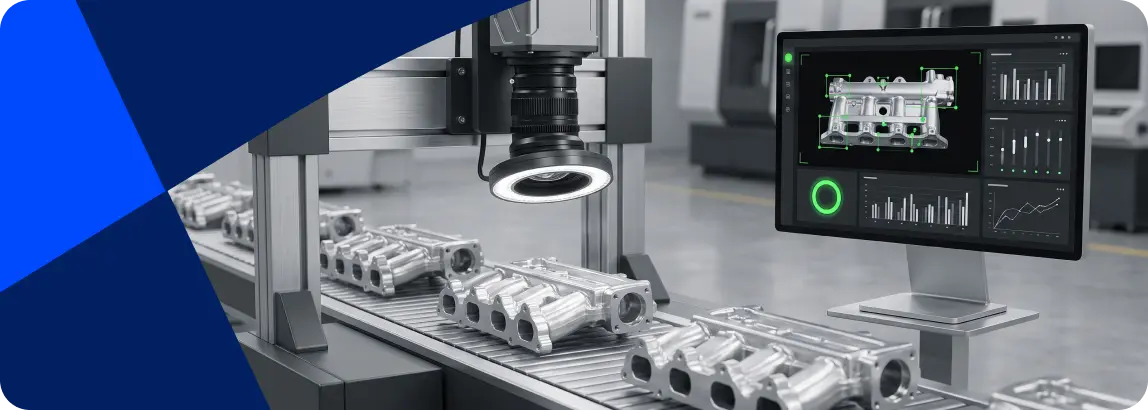
By using computer vision, operational data, and automated analysis, AI quality control systems detect flaws, inconsistencies, and production problems instantly.
AI automatically identifies faulty products during production and promptly notifies quality teams.
Intelligent Workflow Automation
AI automates repetitive administrative tasks, reporting, approvals, and operational coordination across enterprise systems.
Procurement Intelligence & Automation
AI assists procurement teams in optimizing vendor selection, purchase decisions, and approval workflows using enterprise data and operational insights.
Benefits of AI in Operations
Businesses can increase operational scalability, visibility, and efficiency with AI-powered operations.
Improved Operational Efficiency
Enterprise AI reduces manual coordination throughout operational workflows by automating repetitive tasks.
Better Supply Chain Visibility
Businesses can receive up-to-date information on suppliers, inventory, logistics, and operational performance.
Faster Decision-Making
AI quickly analyzes operational data and makes recommendations for required actions.
Reduced Operational Costs
Reduced downtime, waste, delays, and manual labour are all made possible by automation and predictive insights.
Improved Inventory & Procurement Management
With AI for Enterprise, you can improve prediction, stock optimization, and procurement workflows across business operations.
Scalable Operations
AI systems support growing operational complexity without appreciably increasing manual labour.
How AI Works in Enterprise Operations Environments

Integration with Enterprise Systems
ERP systems, supply chain apps, procurement software, inventory platforms, and operational tools are all integrated with AI.
Access to Enterprise Data
AI is assisted in producing precise insights and automated workflows by operational data, supplier information, logistics activity, production records, and inventory data.
Workflow Automation & Execution
You can automate approvals, operational coordination, reporting, inventory updates, and procurement workflows with AI.
Data Grounding for Accuracy
AI systems use Enterprise-approved operational data to ensure reliable outcomes and decision-making.
Continuous Monitoring & Optimization
Over time, AI continuously evaluates operational performance and finds areas for improvement.
AI Services That Optimize Your Manufacturing Operations
Optimize business operations with AI that automates workflows, streamlines processes, and provides real-time operational intelligence. Reduce inefficiencies, improve productivity, and empower teams to make faster, smarter decisions at scale.
AI Agents
Build intelligent AI agents that automate financial inquiries, invoice approvals, reporting, compliance checks, and finance team assistance.

RAG Solutions
Enable finance teams to instantly search financial policies, ERP records, invoices, audit documents, and compliance knowledge using AI-powered retrieval.

AI Automation & Intelligent Workflows
Automate invoice processing, expense approvals, financial reporting, reconciliations, and repetitive finance workflows with intelligent AI.

Self-Hosted LLM
Deploy secure AI that protects sensitive financial records, accounting data, customer transactions, and enterprise financial information while maintaining complete control over your AI infrastructure.

Data Engineering
Connect AI with ERP systems, accounting software, payroll platforms, CRM, and financial databases to deliver accurate, real-time financial insights.

MLOps & AI Infrastructure
Deploy, monitor, and scale AI-powered finance solutions with enterprise-grade infrastructure, governance, security, and continuous optimization.


Why Iconflux
At Iconflux, enterprise AI operations systems for manufacturing and other businesses that increase productivity, visibility, automation, and operational scalability are the main goal.
Built Around Existing Operational Systems

Without interfering with current procedures, solutions integrate with ERP platforms, procurement systems, inventory tools, and operational workflows.
Grounded in Enterprise Data
The AI system is used to produce precise insights, automation choices, and real-time enterprise operational data.
Focused on Practical Operational Challenges
Real operational problems, such as supply chain inefficiencies, procurement delays, inventory planning, and workflow coordination, become the main focus.
Designed for Scale and Reliability
Solutions are designed to accommodate expanding business operations and more complex workflows.
Secure and Governed by Design
From the start, enterprise-grade access management, operational governance, security controls, and compliance are all integrated.
Built Around Existing Operational Systems
Without interfering with current procedures, solutions integrate with ERP platforms, procurement systems, inventory tools, and operational workflows.
Grounded in Enterprise Data
The AI system is used to produce precise insights, automation choices, and real-time enterprise operational data.
Focused on Practical Operational Challenges
Real operational problems, such as supply chain inefficiencies, procurement delays, inventory planning, and workflow coordination, become the main focus.
Designed for Scale and Reliability
Solutions are designed to accommodate expanding business operations and more complex workflows.
Secure and Governed by Design
From the start, enterprise-grade access management, operational governance, security controls, and compliance are all integrated.
Our Blogs


Operations, Powered by AI
Use enterprise AI in manufacturing to streamline supply chains, automate processes, and boost operational effectiveness.
Frequently Asked Questions


Tell Us About Your Project
We will get back to you within 24 hours.