AI for HR Solutions for Modern Enterprises
AI for HR will simplify hiring, automate your mundane repetitive tasks, improve employee engagement, and support smarter workforce decisions. All this while you continue to work with your existing HR systems and processes.
Book Your AI for HR Strategy Call
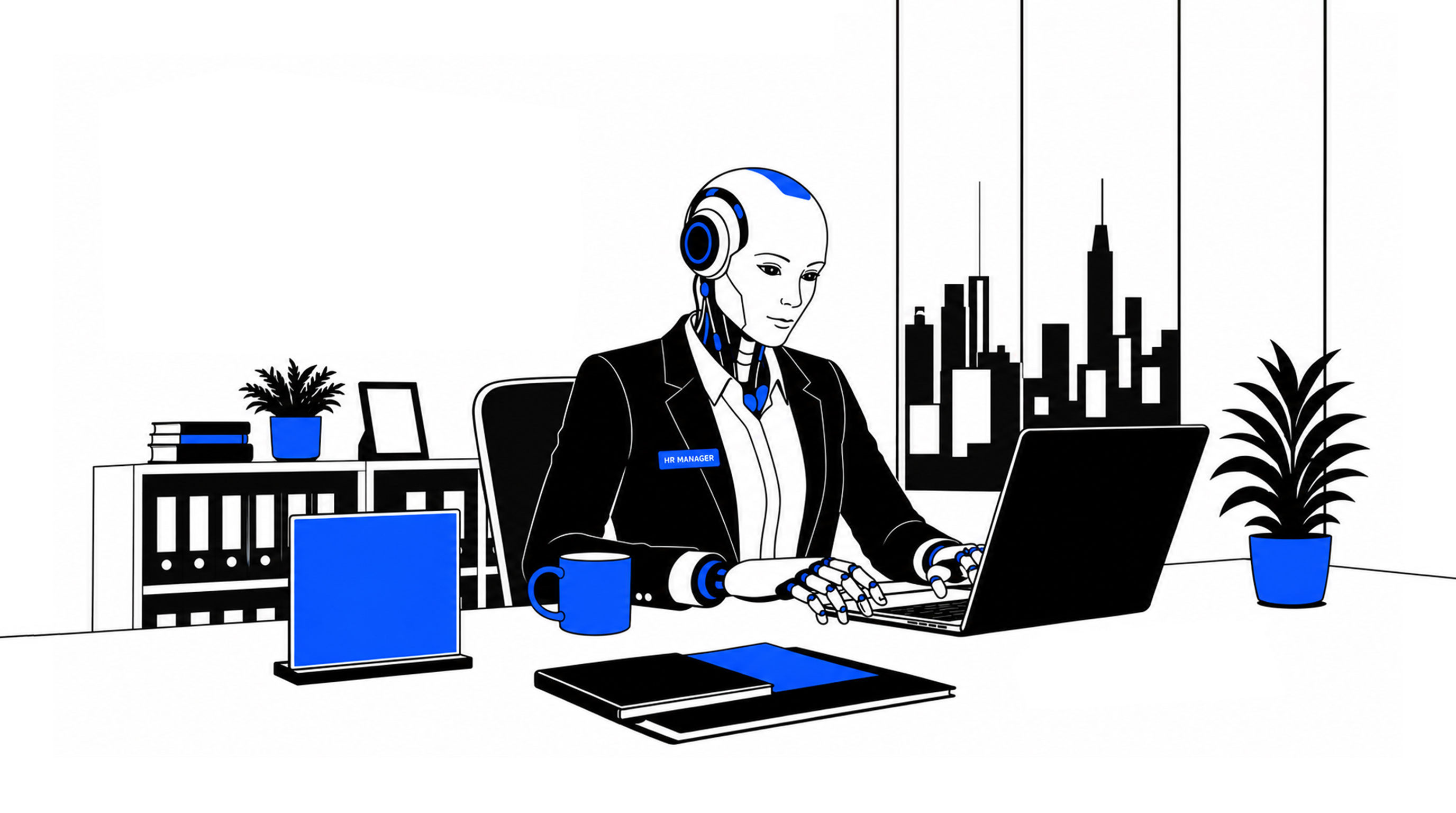
What Does AI for HR Mean
The process is quite long. From recruitment and onboarding to employee engagement, payroll,
and retention, today, your company’s  Human Resources department is handling more than enough.
Some of which can be automated to ease the other big chunk of tension. Therefore, as organizations
grow, manually managing so much data, communication, and  workforce operations will
become increasingly difficult.
This is exactly where AI for HR steps in. AI systems can analyze:

Employee records
Hiring patterns
Attendance trends
Performance insights
Employee engagement signals
After employing  AI for human resources, you will not only see your HR team making more
timely decisions, but also improve hiring quality and reduce repetitive administrative tasks.
To lead your workspace with peace and a positive culture,  integrating human-led
artificial intelligence in HR will help teams work faster, smarter, and more consistently.
How Can AI Be Applied to HR
Artificial intelligence in HR can help businesses manage the entire employee lifecycle, from hiring to retention. How? Let’s analyze that:
Talent Acquisition & Recruitment Automation

Use Case :
Enterprise AI automates resume screening, candidate matching, and recruitment processes by comparing skills, credentials, certifications, and experience to particular job requirements. It minimises manual labour and hiring delays while providing assistance to HR teams in swiftly identifying qualified applicants for both corporate and factory positions.
KRA/KPI Impact :
Maximises sourcing effectiveness while improving hiring quality, cutting down on hiring time, and boosting recruitment productivity.
Generative AI Action :
Candidate summaries, interview scheduling, and customised outreach messages can all be automatically generated.
Intelligent Employee Performance & Feedback Systems
Use Case :
AI supports employee evaluations and performance planning by analyzing past performance records, competencies, training history, and appraisal data. It enables businesses to create more objective, data-driven departmental performance management procedures.
KRA/KPI Impact :
improves the effectiveness of performance management, enhances the quality of goal-setting, and supports employee development initiatives.
Generative AI Action :
Personalised employee development plans, KPI recommendations, and performance reviews are all possible with generative AI.
Automated HR Operations & Employee Self-Service
Use Case :
Employees can instantly access information about leave policies, attendance, payroll, benefits, reimbursements, and company procedures through AI-powered self-service platforms and Retrieval-Augmented Generation (RAG) systems. Employee access to information is enhanced, and repetitive HR inquiries are decreased.
KRA/KPI Impact :
Enhances employee support experiences, speeds up ticket resolution, and increases HR operational efficiency.
Generative AI Action :
Generative AI provides contextual HR guidance, answers employee questions, and explains policies in real time.
Workforce Sentiment Analytics & Predictive Retention
Use Case :
To find workforce risks and retention issues before they worsen, AI examines employee engagement data, attendance trends, performance metrics, survey responses, and past attrition trends.
KRA/KPI Impact :
Encourages improved retention tactics, increased employee engagement, and reduced attrition rates.
Generative AI Action :
Workforce insights, retention suggestions, and summaries of employee engagement are produced by generative AI.
Conversational AI Assistants for Employees & HR Teams
Use Case :
By responding to inquiries about payroll, attendance, onboarding, policies, compliance requirements, and HR procedures in a variety of languages, enterprise AI assistants offer round-the-clock assistance to workers, managers, supervisors, and HR teams.
KRA/KPI Impact :
Enhances workforce communication, HR support effectiveness, and employee satisfaction.
Generative AI Action :
Natural language responses, policy explanations, and automated HR knowledge support are all provided by generative AI
Legal, Compliance & Union Grievance Reference
Use Case :
Retrieval-Augmented Generation (RAG) is a technique used by AI-powered compliance systems to obtain data from internal HR policies, labour laws, factory acts, union agreements, and regulatory frameworks. This facilitates more effective grievance resolution and gives HR and Industrial Relations teams access to precise compliance data.
KRA/KPI Impact :
Enhances legal risk management, grievance resolution speed, audit preparedness, and compliance accuracy.
Generative AI Action :
Using enterprise policies and regulations as a guide, generative AI creates grievance response drafts, audit support documents, and compliance summaries.
What Are the Applications of AI in HR
AI in manufacturing can help businesses improve recruitment, employee management, and workforce planning. How AI supports modern HR processes:

Resume Screening & Candidate Matching
AI for recruitment can effectively parse resumes for skills, experience, qualifications, and job fit. This enables your recruiters to focus on qualified candidates rather than manually filtering applications.
Automated Interview Scheduling
HR automation can automatically arrange interviews by checking candidate and interviewer availability. This reduces manual coordination and scheduling delays.
Employee Sentiment Analysis
Your HR team can leverage AI to analyze employee surveys, feedback, and engagement trends to gauge workplace morale and satisfaction. This will help the business to identify issues before they escalate into larger problems.
AI-Powered Employee Assistance
Your employees can use AI chat assistants to get quick answers to questions about HR policies, payroll timelines, leave balances, and onboarding support. This will improve both response times and employee satisfaction.
Workforce Planning & HR Insights
AI for HR will enable your businesses to better understand hiring trends, workforce gaps, department performance, and employee movement patterns. This will forge a better workforce planning for the team.
Employee Retention Prediction
Not only will AI for employee retention identify employees who may be considering leaving based on their engagement, attendance, and performance, but this will also help HR teams to improve retention strategies proactively.
What Are the Benefits of AI in HR
AI for HR enables organizations to enhance employee experiences, automate repetitive tasks, and make more informed workforce decisions.
Faster Hiring Processes
You may have noticed that recruitment frequently takes longer than expected due to manual resume screening and interview coordination. However, AI for recruitment facilitates teams to identify suitable candidates more quickly and streamline hiring processes.
Reduced Administrative Work
HR departments spend a significant amount of time managing repetitive tasks, from updating records to responding to employee inquiries. However, with HR automation, these routine tasks can be handled automatically.
Better Employee Experience
Employee satisfaction can suffer as a result of delayed responses and inefficient HR processes. AI-powered HR systems, on the other hand, allow employees to receive speedier support and have a more cheerful workplace experience.
Improved Workforce Visibility
As organizations grow, it becomes more difficult to track staff morale, attendance, and workforce performance. Artificial intelligence in HR allows businesses to gain insight into workforce operations and employee trends.
More Accurate Hiring Decisions
AI for recruitment encourages organizations to make better hiring decisions by more effectively analyzing candidate suitability.
Improved Employee Retention
You must have seen employees leave due to exhaustion, detachment, or negative workplace experiences. AI for employee retention facilitates organizations in identifying these issues early and improving retention efforts.
How AI Works in Enterprise HR Environments

Integration with Existing HR Systems
AI for HR integrates with HRMS platforms, payroll systems, recruitment software, attendance tools, and internal communication platforms. This will allow your business to improve operations without having to replace its existing systems.
Access to Workforce Data
AI systems use employee records, recruitment data, attendance information, engagement surveys, and performance metrics to generate useful insights.
Better Data-Driven Decisions
Instead of generic outputs, AI for Human Resources generates context-aware recommendations based on internal workforce data.
Workflow Automation & Coordination
Automating tasks such as interview scheduling, employee onboarding, reminder notifications, leave approvals, and employee support saves time and improves operational consistency.
Continuous Learning & Improvement
AI systems improve over time as they learn from employee interactions, hiring results, and HR operations.
AI Services That Power Your HR Transformation
Reimagine HR with enterprise AI that streamlines hiring, automates routine processes, improves employee experiences, and empowers smarter decision-making. Build a faster, more efficient, and future-ready HR function while keeping your workforce connected, productive, and focused on what matters most.
AI Agents
Build intelligent AI agents that automate financial inquiries, invoice approvals, reporting, compliance checks, and finance team assistance.

RAG Solutions
Enable finance teams to instantly search financial policies, ERP records, invoices, audit documents, and compliance knowledge using AI-powered retrieval.

AI Automation & Intelligent Workflows
Automate invoice processing, expense approvals, financial reporting, reconciliations, and repetitive finance workflows with intelligent AI.

Self-Hosted LLM
Deploy secure AI that protects sensitive financial records, accounting data, customer transactions, and enterprise financial information while maintaining complete control over your AI infrastructure.

Data Engineering
Connect AI with ERP systems, accounting software, payroll platforms, CRM, and financial databases to deliver accurate, real-time financial insights.

MLOps & AI Infrastructure
Deploy, monitor, and scale AI-powered finance solutions with enterprise-grade infrastructure, governance, security, and continuous optimization.


Why Iconflux
At Iconflux, we are motivated to create AI for HR solutions that integrate smoothly with your existing HR systems and workforce processes.
Built around existing HR workflows

Our AI for manufacturing solutions work seamlessly with your recruiting systems, HRMS platforms, payroll tools, and internal communication applications.
Powered by Enterprise Workforce Data
Artificial intelligence in HR is most effective when combined with internal workforce data, employee interactions, and operational insights.
Focused on Real HR Challenges
We focus on practical use cases such as AI for recruitment, HR automation, and employee engagement, all of which are designed for scalability and reliability.
Secure and governed by design
Access control, employee privacy, compliance, and data governance are all built into every solution.
Built around existing HR workflows
Our AI for manufacturing solutions work seamlessly with your recruiting systems, HRMS platforms, payroll tools, and internal communication applications.
Powered by Enterprise Workforce Data
Artificial intelligence in HR is most effective when combined with internal workforce data, employee interactions, and operational insights.
Focused on Real HR Challenges
We focus on practical use cases such as AI for recruitment, HR automation, and employee engagement, all of which are designed for scalability and reliability.
Secure and governed by design
Access control, employee privacy, compliance, and data governance are all built into every solution.
Our Blogs

HR Powered by Better Intelligence
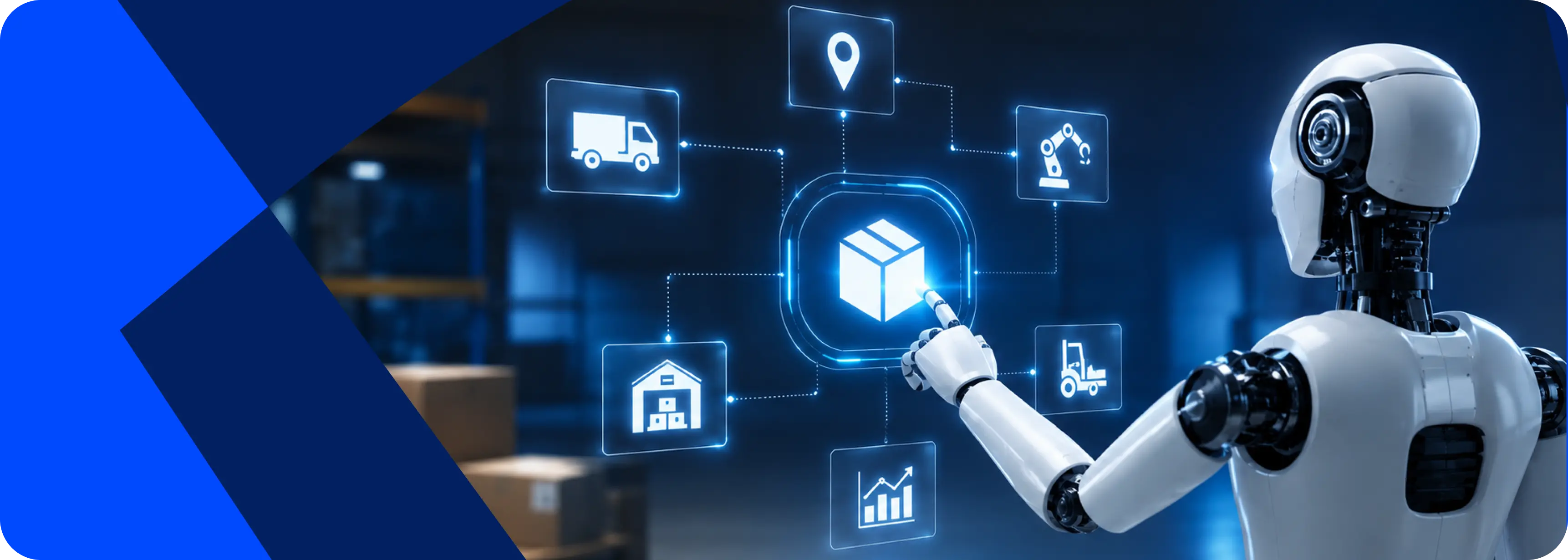
Businesses can use AI for HR to reduce repetitive work, improve hiring quality, provide better employee support, and make more informed workforce decisions at scale.
Frequently Asked Questions


Tell Us About Your Project
We will get back to you within 24 hours.