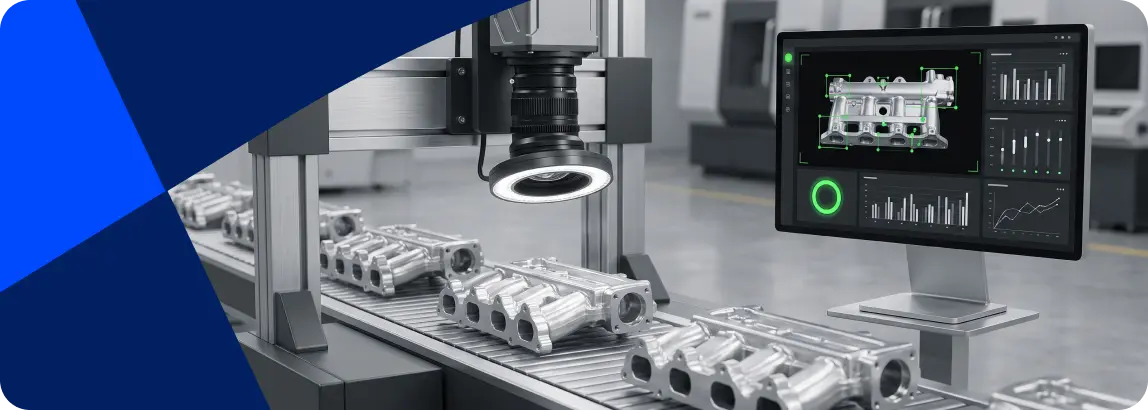

Tier-2 manufacturers face tighter quality requirements, shorter production cycles, and increasing expectations from OEMs and global supply chains. For that reason, demand for quality control in manufacturing is essential because production volumes increase; traditional manual inspection can struggle to maintain consistent accuracy.
But things have changed a lot. Manufacturers can manage their quality control with Iconflux’s AI Visual inspection. The inspection combines cameras, machine vision, and artificial intelligence. Manufacturers can inspect products continuously, identify defects, and support faster quality decisions without relying entirely on manual inspection.
What Is AI Visual Inspection?
It is an advanced process of inspecting raw products and manufactured materials using artificial intelligence.AI visual inspection uses cameras, image-processing technologies, and AI models to identify defects, abnormalities, and variations in manufactured products.
AI-based systems can be trained to recognize patterns from images and distinguish acceptable products from potential defects. It is a totally different approach from conventional inspection systems that depend entirely on predefined rules.
Let us understand it with an example,
A Tier 2 automotive component manufacturer that produces hundreds of metal parts per hour may need to detect scratches, incorrect dimensions, surface defects, or missing components. A camera-based inspection system can capture images of each part, which AI analyzes to identify products that require further inspection.
Why Tier-2 Manufacturers Need Automated Visual Inspection
Quality inspection still involves a combination of manual checks and basic automation. This can create several challenges for Many Tier-2 manufacturers as production volumes increase.
● Inconsistent inspection across shifts
● Fatigue-related human errors
● Slow identification of defects
● Difficulty inspecting every component
● Limited quality data for root-cause analysis
● Increasing pressure to meet OEM quality standards
Products can be continuously inspected with reliable outcomes by an automated visual inspection system. This allows quality teams to focus their expertise on exceptions, complex defects, and corrective actions rather than human inspectors.
Machine Vision Inspection vs AI Visual Inspection
Machine vision inspection uses traditional cameras, lighting, image processing, and predefined rules to identify specific characteristics. This process can take a lot of time.
AI visual inspection adds machine learning capabilities that can recognize more complex patterns and variations.
| Traditional Machine Vision | AI Visual Inspection |
| Rule-based inspection | AI-based pattern recognition |
| Requires predefined inspection rules | Can learn from labelled inspection images |
| Effective for clearly defined defects | Better suited to complex visual variations |
| Changes may require rule adjustments | Models can be retrained with new data |
| Limited contextual analysis | Can support broader defect classification |
The manufacturing process, defect type, image quality, and business needs all influence the appropriate strategy. AI and traditional machine vision can coexist in some factories.
How AI for Quality Control Works
Assume a manufacturer of auto parts is examining painted parts.
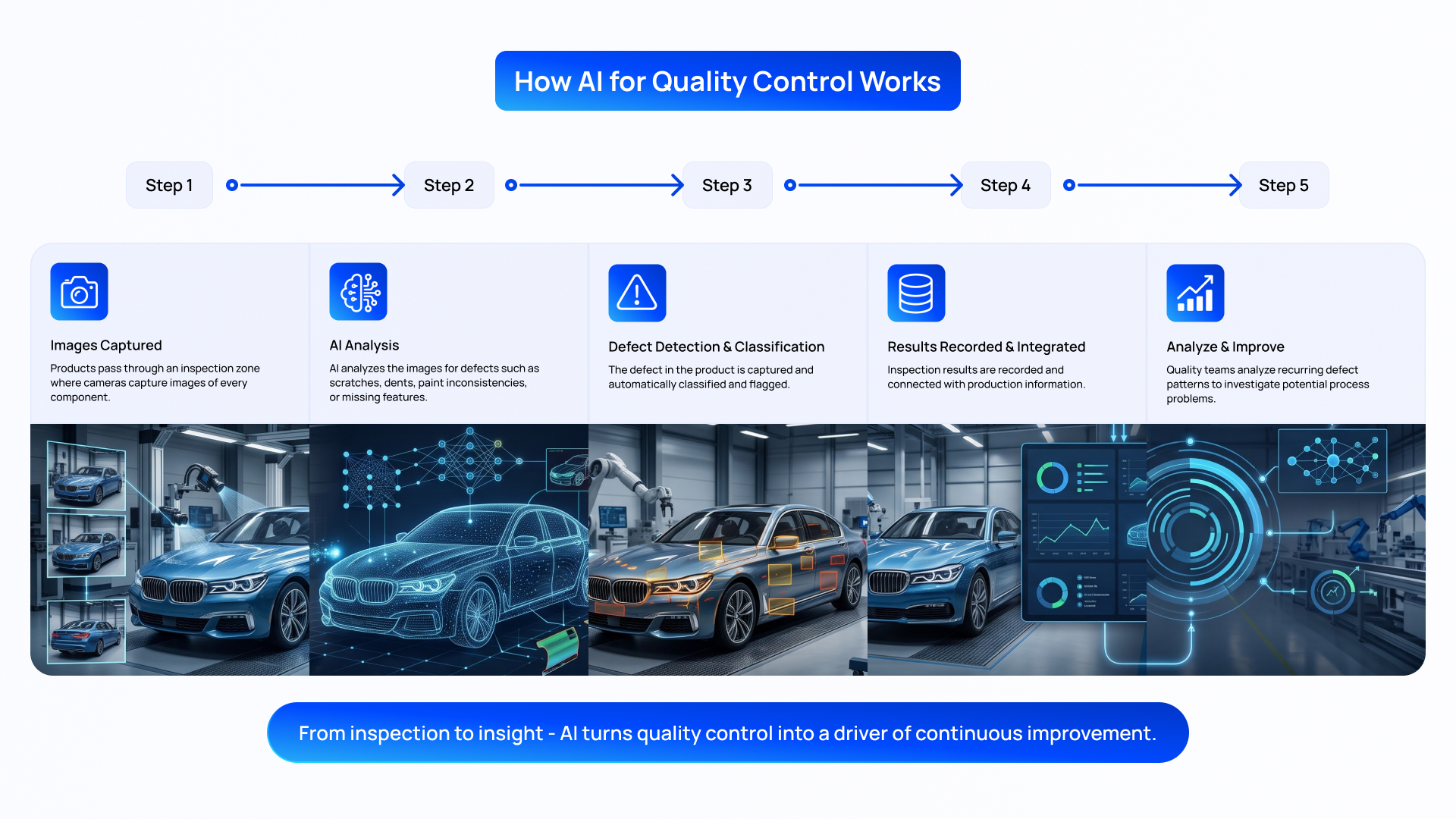
A typical AI for quality control workflow could involve:
Step 1:
All the products pass through an area where cameras capture images of every component moving through the inspection.
Step 2:
AI analyzes the images for defects such as scratches, dents, paint inconsistencies, or missing features.
Step 3:
The defect in the product is captured and automatically classified and flagged.
Step 4:
Inspection results are recorded and connected with production information.
Step 5:
Quality teams analyze recurring defect patterns to investigate potential process problems.
As a result, quality inspection is no longer just a pass-or-fail process. It can produce helpful data for ongoing development.
AI in Quality Management and Operations
AI is useful for more than just spotting faulty goods. Organizations can use AI in quality managementto compare performance across production lines, find recurrent defect patterns, and assist with root-cause investigations.
Inspection data can also support AI in operations when it is integrated with manufacturing systems. In addition to production, machine, and process data, operations teams can use quality data to identify the source of quality issues.
For example, connected Enterprise AI systems could help maintenance and quality teams examine if defects consistently rise after a specific machine runs for a specific number of hours.
Building the Right Foundation for AI Inspection
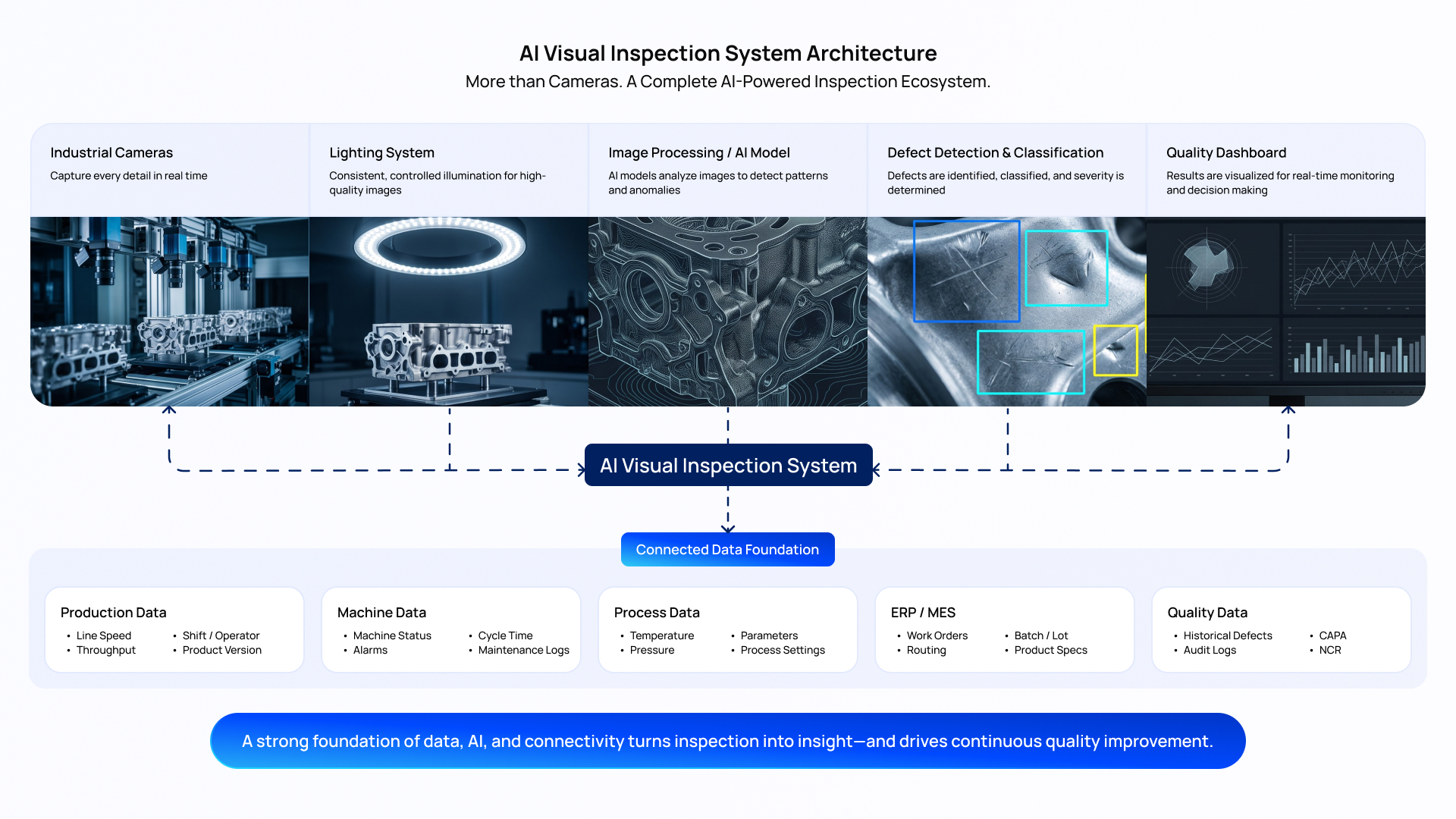
Installing cameras is not enough for AI visual inspection to be successful. Appropriate lighting, high-quality image data, dependable connectivity, suitable Enterprise AI models, and integration with current manufacturing systems are all necessary. A sensible strategy for Tier-2 manufacturers is to start with one quantifiable quality issue, like component presence or surface flaws, and assess the outcomes before extending to more production lines.


